
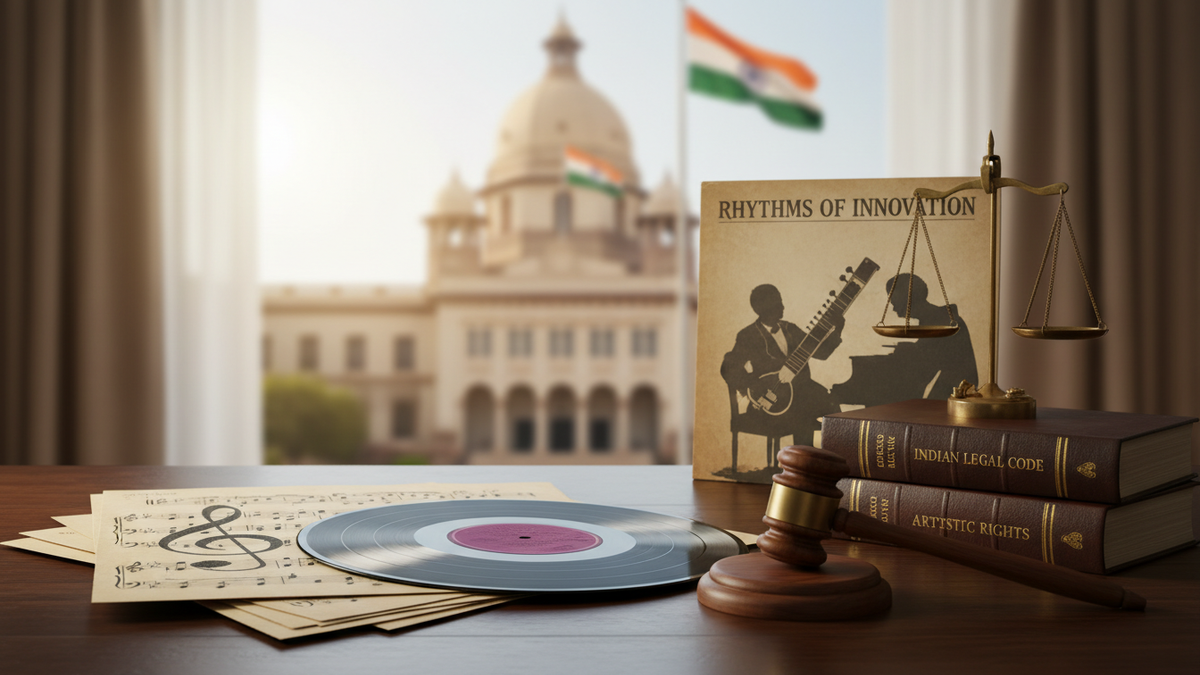
On 1 October 2026, a Supreme Court bench of Justices J.B. Pardiwala and K. Vinod Chandran declined to interfere with the Delhi High Court’s ruling in the dispute between composer Ilaiyaraaja and Saregama India Limited over the 1980 song “En Iniya Pon Nilave” from the Tamil film Moodu Pani. The special leave petition was dismissed, and with it the High Court’s central proposition survived: a composer keeps copyright in the music of a film song, but that does not let the composer license the song’s sound recording or lyrics.
The dispute looks like a celebrity squabble, but it answers a question that every film producer, music label, composer and streaming platform in India has to answer when old film music is recreated: who can license what?
Background: A 1980 Song and a 2023 Licence
Moodu Pani was produced by Raja Cine Arts. According to the Delhi High Court’s Division Bench judgment, on 25 February 1980 the producer assigned copyright in the film’s sound recordings to the Gramophone Company of India Limited, later renamed Saregama India Limited.
In 2023, Ilaiyaraaja signed a separate agreement with Vels Film International Limited, purporting to permit the use of a recreated version of the song in the film Aghathiyaa. Saregama learned of the promotional material, issued a cease-and-desist notice and sued in the Delhi High Court.
The Single Judge’s Interim Order
On 30 January 2025, a day before Aghathiyaa’s scheduled release, a Single Judge held that Saregama was the owner of copyright in the sound recording and, prima facie, the underlying works by assignment from the producer. The court allowed the song to be used in the film only if Vels deposited ₹30 lakh as a licence fee. Reports say Vels then undertook to release the film without the song.
Ilaiyaraaja appealed to the Division Bench.
The Division Bench: Unbundling a Film Song
A Division Bench of Justices C. Hari Shankar and Om Prakash Shukla dismissed the appeal on 21 May 2026 (FAO(OS)(COMM) 52/2025, 2026:DHC:4556-DB). It upheld the injunction but, importantly, did not accept every part of the Single Judge’s reasoning.
Section 13(4): The Composer’s Surviving Right
Section 13(4) of the Copyright Act, 1957 provides that copyright in a cinematograph film or sound recording does not affect the separate copyright in any work, such as music, that is incorporated into it. Ilaiyaraaja relied on this provision. The Division Bench accepted the principle: his copyright in the musical work did not disappear simply because the music was used in a film.
Why It Was Not Enough
The court held that Section 13(4) protects the underlying work but “did not authorise exploitation of the sound recording itself.” Its key findings, as reported:
- Copyright in the sound recordings in Moodu Pani vested in the producer, Raja Cine Arts, and never resided in Ilaiyaraaja.
- Ilaiyaraaja’s copyright was limited to the musical component and did not extend to the lyrics or the sound recording.
- Because the 1980 agreement transferred the gramophone recording rights, he could not have assigned the sound recording to Vels.
- Recreating the song without Saregama’s licence infringed Saregama’s sound-recording copyright, whatever rights the composer held in the tune.
The court also considered the first-owner rules in Section 17 of the Act, which decide who initially owns copyright, and found the proviso on contracts of service inapplicable.
The Review Petition
On 26 May 2026 the same bench dismissed a review petition, finding that “no error apparent on the face of the record” was made out and that review cannot be used to rehash earlier arguments. The composer’s counsel had argued the ruling left him unable to use his own musical work; the bench was unmoved.
The Supreme Court’s Order
On 1 October 2026 the Supreme Court dismissed the SLP. Senior Advocate C.A. Sundaram argued that his client contested only the infringement findings and claimed rights solely in the musical work. Justice Pardiwala repeatedly asked, “Why are you all fighting unnecessarily?”
The bench held, as reported by Lawbeat, that “no error, not to speak of any error of law, could be said to have been committed by the High Court.” At the petitioner’s request it also recorded that the High Court’s observations are prima facie and were made for deciding the issue in question.
That caveat matters. This was a dismissal of a special leave petition against an interim-stage ruling, not a full Supreme Court exposition of Sections 13 and 17. The prima facie findings do not conclusively bind later trials, although other courts will find the Division Bench’s reasoning persuasive.
Why This Matters
For Composers
The ruling confirms that composers keep something valuable: a separate right in the music, which they can license independently. But the right is narrow. Composers who worked under older film-industry arrangements, where producers took assignments of recordings, should not assume they can authorise a “recreated” version that reuses the original recording or lyrics.
For Producers and Film Makers
Anyone planning a remake or recreated track should map the chain of title for each layer, namely music, lyrics and sound recording, and obtain licences from each owner. A single licence from the composer will not clear the others.
For Labels and Platforms
Labels holding legacy assignments gain support for enforcing them. His counsel told the Supreme Court that three later suits rely on the challenged findings, so the decision will shape how back-catalogue rights are enforced.
Practical Takeaways for Legal Professionals
- Audit title layer by layer. Section 13(4) means a film song carries several distinct rights, often with different owners.
- Read old assignments carefully. The 1980 agreement was decisive. Scope, territory and duration clauses in decades-old contracts will decide modern disputes.
- Expect prima facie rulings to be used. Even with the Supreme Court’s caveat, interim findings drive release-date negotiations.
- Use deposits as a tool. The ₹30 lakh deposit mechanism let a release proceed while protecting the rights-holder, a template for urgent interim relief in entertainment cases.
Frequently Asked Questions
Did the Supreme Court decide that Ilaiyaraaja has no rights in his own songs?
No. The courts accepted that he holds copyright in the musical work of “En Iniya Pon Nilave”. What he does not hold is copyright in the lyrics or the sound recording of that song from Moodu Pani.
Who owns the sound recording of the song?
According to the Delhi High Court, copyright in the sound recordings of Moodu Pani vested in the producer, who assigned gramophone recording rights in 1980 to the company now called Saregama India Limited.
Is the Supreme Court’s order a binding precedent on film music rights?
Not in the full sense. The Supreme Court dismissed the special leave petition and recorded that the High Court’s observations are prima facie. The Delhi High Court’s Division Bench reasoning remains persuasive.
What does Section 13(4) of the Copyright Act say?
It provides that copyright in a cinematograph film or sound recording does not affect the separate copyright in any work, such as music, incorporated into it. The Division Bench held this protects the underlying music but does not authorise exploiting the sound recording.
Can a film maker recreate an old film song with only the composer’s permission?
Based on this ruling, that is risky. A recreated song may need licences from the owners of the music, lyrics and any original sound recording used, who can be different people.
Sources
- LiveLaw: Supreme Court Refuses To Interfere With Delhi High Court Ruling Against Ilaiyaraaja - report on the 1 October 2026 Supreme Court order
- LiveLaw (Business): ‘Why Are You Fighting Unnecessarily?’ - arguments and observations at the hearing
- Lawbeat: Supreme Court Upholds Delhi HC Order In Ilaiyaraaja vs Saregama - quotes from the order and the prima facie clarification
- Verdictum: Ilaiyaraaja v. Saregama India Limited, 2026:DHC:4556-DB - summary of the Division Bench judgment
- Bar & Bench: Delhi HC rejects Ilaiyaraaja’s review petition - review dismissal of 26 May 2026
- Indian Kanoon: Saregama India Limited v. Vels Film International Limited, 30 January 2025 - Single Judge’s interim order
- Bar & Bench: Ilaiyaraaja has no copyright over lyrics, sound recording - report on the High Court ruling