
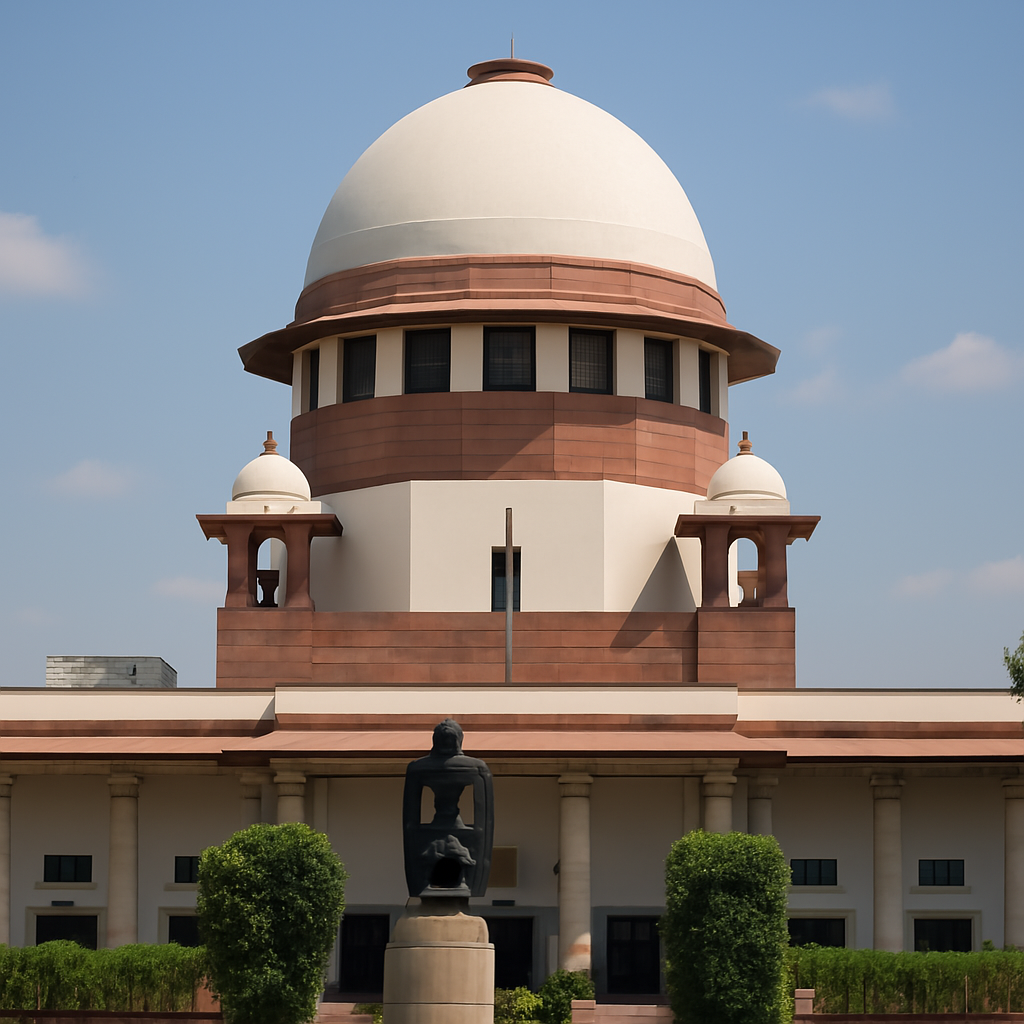
- Case Name: Piramal Capital and Housing Finance Limited (Formerly Known as Dewan Housing Finance Corporation Limited) v. 63 Moons Technologies Limited & Others
- Date: 1 April 2025
- Judges: Honourable Justice Bela M. Trivedi, Honourable Justice Satish Chandra Sharma
- Advocates:
- Acts and Sections:
- Cited Judgements:
Introduction
On 1 April 2025, the Supreme Court of India, presided over by Honourable Justice Bela M. Trivedi and Honourable Justice Satish Chandra Sharma, delivered a landmark judgement in Piramal Capital and Housing Finance Limited v. 63 Moons Technologies Limited & Others. This ruling addressed a series of civil appeals arising from the corporate insolvency resolution process (CIRP) of Dewan Housing Finance Corporation Limited (DHFL), a non-banking financial company (NBFC) embroiled in one of India’s largest financial scandals. The judgement reaffirms the primacy of the commercial wisdom of the Committee of Creditors (CoC) under the Insolvency and Bankruptcy Code, 2016 (IBC), while delineating the limited scope of judicial intervention by the National Company Law Tribunal (NCLT) and the National Company Law Appellate Tribunal (NCLAT). This article, tailored for legal professionals in India, examines the key legal principles, analyses the court’s reasoning, and highlights its implications for insolvency law practice.
Background and Factual Matrix
DHFL, a housing finance company regulated under the Reserve Bank of India Act, 1934 (RBI Act) and the National Housing Bank Act, 1987 (NHB Act), faced allegations of financial fraud involving thousands of crores of rupees. On 20 November 2019, the Reserve Bank of India (RBI) superseded DHFL’s Board of Directors under Section 45-IE of the RBI Act, appointing Mr. R. Subramaniakumar as Administrator. Subsequently, on 29 November 2019, the RBI initiated CIRP under the IBC, which the NCLT admitted on 3 December 2019. The CoC, comprising banks, financial institutions, fixed deposit (FD) holders, and non-convertible debenture (NCD) holders, approved a resolution plan (RP) submitted by Piramal Capital and Housing Finance Limited (Piramal Capital) with 93.65% votes on 15 January 2021. The RP, offering INR 37,250 crores, was approved by the NCLT on 7 June 2021.
However, disputes arose over three key issues: (1) the treatment of recoveries from avoidance applications under Section 66 of the IBC, (2) the distribution mechanism for FD and NCD holders, and (3) the rights of ex-promoters to participate in the CIRP. The NCLAT, in its impugned order dated 27 January 2022, partially modified the RP, directing the CoC to reconsider the appropriation of Section 66 recoveries by Piramal Capital. This led to multiple appeals before the Supreme Court, categorised into three groups: avoidance applications, FD/NCD holders’ claims, and ex-promoters’ rights.
Legal Issues and Court’s Findings
1. First Category: Avoidance Applications and Commercial Wisdom
The primary contention in the first category of appeals (Civil Appeal Nos. 1632-1634, 2989-2991, and 3694-3695 of 2022) was whether the NCLAT erred in interfering with the CoC’s decision to allow Piramal Capital to retain recoveries from avoidance applications under Section 66 of the IBC, which deals with fraudulent and wrongful trading. The RP ascribed a notional value of INR 1 to these recoveries, estimated at INR 45,050 crores, in exchange for a higher upfront payment.
The Supreme Court overturned the NCLAT’s decision, restoring the NCLT’s approval of the RP. Honourable Justice Trivedi emphasised the sanctity of the CoC’s commercial wisdom, stating:
“The commercial wisdom of CoC has been given the prominent status, with the least judicial intervention, for ensuring the completion of Resolution Process within the prescribed timelines.” (Para 84)
The court held that the CoC’s decision to trade uncertain recoveries for a lump-sum payment of INR 37,250 crores was a legitimate commercial bargain, not amenable to judicial review absent perversity. It rejected the NCLAT’s reliance on foreign jurisprudence and Regulation 37A of the Liquidation Regulations, noting that Section 26 and Regulation 37(a) of the CIRP Regulations permit the transfer of assets, including potential recoveries, in a resolution plan. The court clarified that recoveries under Sections 43, 45, 47, 49, and 50 would benefit the CoC, while Section 66 recoveries would accrue to Piramal Capital, aligning with the RP’s terms.
2. Second Category: Rights of FD and NCD Holders
The second category of appeals (Diary No. 6037, Civil Appeal Nos. 2413-2415, 2396, 2402, 8123-8125, and 6286 of 2022) involved FD and NCD holders challenging the RP’s distribution mechanism, which provided full repayment only to FD holders with claims up to INR 2 lakhs, while others received a pro-rata share based on liquidation value. The appellants argued that this violated their statutory rights to full repayment under Section 36A of the NHB Act and Section 45-QA of the RBI Act.
The court dismissed these appeals, finding no mandate in the NHB Act or RBI Act for full repayment of deposits. Honourable Justice Trivedi observed:
“Neither Section 36(A) of NHB Act nor Section 45(QA) of RBI Act mandates full payment of the deposits of the FD Holders, as sought to be contended by the learned counsels for the Appellants.” (Para 95)
The court upheld the CoC’s distribution mechanism, approved by 86.95% of its members, as falling within its commercial discretion. It further noted that FD and NCD holders, represented by authorised representatives under Section 21(6A)(b) of the IBC, were bound by the majority decision, reinforcing the democratic principles embedded in the IBC framework (Jaypee Kensington, Para 424).
3. Third Category: Rights of Ex-Promoters
The third category (Civil Appeal Nos. 1707-1712, 2567, and 2987-2988 of 2022) addressed the ex-promoters’ (Kapil Wadhawan and Dheeraj Wadhawan) claims to participate in CoC meetings and access the RP. The court distinguished between “supersession” under the RBI Act and “suspension” under the IBC, noting that the former permanently vacated the directors’ offices, unlike the temporary effect of the latter.
Honourable Justice Trivedi held:
“The Appellants - KW and DW, who were the Directors of DHFL at the relevant time, having deemed to have vacated their offices on the supersession of the Board of Directors under the RBI Act, could not have claimed any right to attend the meetings of CoC or to participate in the CIRP proceedings.” (Para 109)
While suspended directors under Section 24 of the IBC have a right to attend CoC meetings without voting, superseded directors lack such entitlement. The court allowed them access to the approved RP as a public document under Section 74 of the Indian Evidence Act but dismissed their broader claims.
Implications for Legal Practice
This judgement reinforces several critical principles for insolvency practitioners in India:
- Primacy of CoC’s Commercial Wisdom: The court’s deference to the CoC’s decision-making underscores the IBC’s objective of balancing creditor interests with timely resolution. Legal challenges to RPs must demonstrate clear legal violations under Section 30(2) or 31, not merely question commercial judgement.
- Treatment of Avoidance Recoveries: The distinction between recoveries under Sections 43-50 (for creditors) and Section 66 (for the resolution applicant) provides clarity on structuring RPs, though it may invite further debate on equitable distribution.
- Limited Rights of Stakeholders: FD/NCD holders and ex-promoters must navigate their claims within the IBC’s collective framework, limiting individual challenges post-majority approval.
- Judicial Restraint: The restricted scope of NCLT and NCLAT review under Sections 31 and 61, respectively, curtails appellate overreach, aligning with precedents like Essar Steel and Ghanashyam Mishra.
Conclusion
The Supreme Court’s ruling in Piramal Capital v. 63 Moons Technologies is a robust affirmation of the IBC’s creditor-driven ethos. By upholding the CoC’s authority and clarifying the legal status of avoidance recoveries and stakeholder rights, it provides a stable framework for insolvency resolutions involving complex financial entities like DHFL. For legal professionals, this judgement serves as a reminder to prioritise statutory compliance and collective decision-making over equitable or individual grievances, ensuring the IBC’s efficacy in maximising value and minimising delays.